
Radiology Courses After 12th: Radiology is one of the quickest expanding areas in the healthcare field. With the evolution of medical technology, imaging has become indispensable for identifying and combating diseases.
Table of Contents
Several students who are interested in healthcare but do not want to become surgeons or doctors usually choose radiology as their profession. If you are a science student considering Radiology Courses After 12th, then this article will give you a clearer idea of the courses offered eligibility career options, and the procedure to be a radiologist.
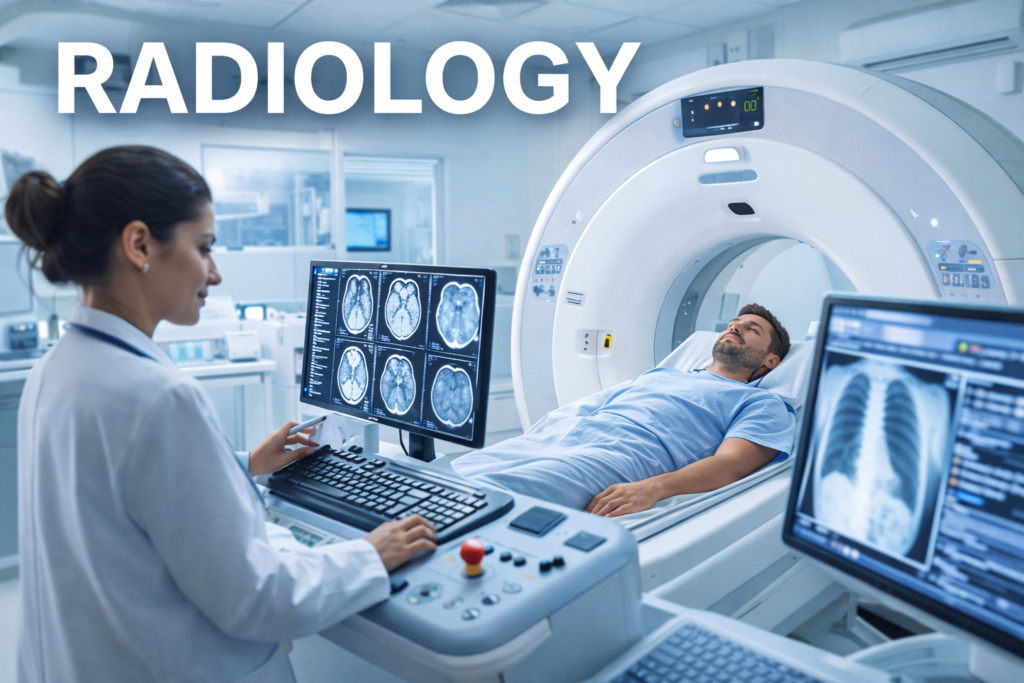
what exactly is radiology?
Radiology is a division of medical science that makes use of imaging methods for the diagnosis and treatment of diseases. The experts in this field rely on tools like X, rays, CT scans, MRI scans, ultrasound, and nuclear medicine to observe internal organs and the human body.
Radiologists and radiology technicians are essential members of the healthcare system today who assist the doctors to precisely and swiftly identify medical conditions. As diagnostic imaging services are experiencing rapid growth worldwide, coursework in Radiology Courses After 12th are fetching high popularity among students.
Eligibility for Radiology Courses After 12th
Students who want to follow radiology courses must have minimum eligibility criteria fulfilled by them.
Most colleges will expect you to have science background with physics, chemistry, and biology. Amongst these, physics is a necessary subject.
Basic Eligibility Requirements
| Criteria | Requirement |
|---|---|
| Educational Qualification | 12th pass with Science (PCB/PCM) |
| Minimum Marks | 45%–50% (varies by institution) |
| Age Limit | Usually 17 years or above |
| Entrance Exams | Required for some universities |
Students who meet these criteria can apply for diploma, undergraduate, or degree programs in radiol
Popular Radiology Courses After 12th
There are multiple programs available depending on the level of specialization you want to achieve. Some courses focus on becoming a radiology technician, while others lead to becoming a full medical radiologist.
Top Radiology Courses
| Course Name | Duration | Career Role |
|---|---|---|
| Diploma in Radiology | 1–2 Years | Radiology Technician |
| Diploma in X-Ray Technology | 1–2 Years | X-Ray Technician |
| B.Sc Radiology / Radiography | 3 Years | Radiology Technologist |
| B.Sc Medical Imaging Technology | 3–4 Years | Imaging Specialist |
| MBBS + MD Radiology | 5.5 + 3 Years | Radiologist |
Students looking for a quick entry into the healthcare sector often choose diploma programs, while those aiming for higher professional positions pursue degree programs. Choosing the right Radiology Courses After 12th depends on your career goals and academic interests.
Skills Required for a Career in Radiology
Radiology professionals must possess a combination of technical knowledge and soft skills to perform their duties effectively.
Very Necessary Skills
- Thoroughness,
- Expertise in using imaging instruments,
- patient handling,
- problem solving/critical thinking,
- talking to doctors and medical staff,
Training aside from gaining Radiology Courses After 12th, upgrading these skills would prove to be very beneficial for one in the profession.
Step-by-Step Guide to Become a Radiologist
Becoming a radiologist requires more advanced education compared to radiology technicians. Below is the typical pathway:
Step 1: Complete 12th with Science
You will need to graduate from higher secondary (12th grade) in order to become a radiologist. Science courses (such as physics, chemistry and biology) must be completed.
Step 2: Passing a Medical Entrance Examination
Before you can pursue an MBBS, you must pass an entrance examination. There are many medical entrance examinations across India; for example, NEET.
Step 3: Completion of an MBBS Degree
Once you have completed your MBBS degree (which usually takes between 5.5 and 6 years), you may then pursue a specialization in Radiology.
Step 4: Specialization in Radiology
Once you complete your MBBS, you are eligible to complete either a MD or DNB with a specialization in Radiology in order to become a Radiologist.
Step 5: Work Experience as a Radiologist
Radiologists generally work in a variety of facilities, including hospitals, diagnostic centers, and research facilities.
Although there is a lengthy education process associated with becoming a Radiologist, many students may choose to pursue on a short-term (technician or technologist) basis, Radiology courses after 12th grade.
Career Opportunities in Radiology
Radiology offers a wide range of job opportunities in both public and private healthcare sectors. With hospitals and diagnostic centers expanding rapidly, trained professionals are always in demand.
Also Read: Radiography Imaging: Basic Techniques for Better Image Quality
Job Roles in Radiology
| Job Role | Description |
|---|---|
| Radiology Technician | Operates imaging equipment |
| X-Ray Technician | Specializes in X-ray imaging |
| MRI Technician | Handles MRI scanning machines |
| CT Scan Technician | Performs CT imaging procedures |
| Radiologist | Diagnoses diseases using imaging techniques |
After completing Radiology Courses After 12th, students can work in hospitals, diagnostic laboratories, clinics, and medical research centers.
Salary in Radiology Field
The salary in radiology varies depending on qualifications, experience, and job role.
Average Salary in India
| Job Position | Average Salary (Per Year) |
|---|---|
| Radiology Technician | ₹2.5 – ₹4 Lakh |
| MRI Technician | ₹3 – ₹6 Lakh |
| CT Scan Technician | ₹3 – ₹5 Lakh |
| Radiologist | ₹10 – ₹25 Lakh |
Conclusion
Radiology keeps changing and growing fast in today’s healthcare world. If you’re curious about medical technology or love the idea of working with diagnostic imaging, this field opens a lot of doors. There are plenty of diploma, degree, and medical programs out there, so you can pick the path that fits you best. With the right radiology course after 12th, you’ll find yourself working as a radiology technician, an imaging specialist, or—if you keep going with your studies—even as a radiologist. It’s a solid way into the healthcare field, and there’s a real sense of purpose in the work.